
Equal opportunity, preparation for college and career, innovations to improve people’s lives, and a competitive US position in a global economy—- these are the needs that are driving a rethink of the approach to education. Leading the transformation of education are initiatives like STEM and a vision for a new approach to teaching and learning articulated in A Framework for K-12 Science Education.
A Changing Focus in Education
by
We are changemakers. We are learners. We are educators.
A changing focus in education
American education is in the midst of a major transformation, driven in large part, by a technology-focused global economy. Societal shifts like the Industrial Revolution had great impacts on education in the past. We can now ask ourselves, how is the digital revolution affecting the jobs and opportunities that await America’s students?
Genetic Engineering & Biotechnology News Chooses BenchFly
by
We’re very excited to announce our new partnership with Genetic Engineering & Biotechnology News (GEN) to help bring two new video-based services to scientists. For more information, see the original release below. To learn more about how you can participate in Product Pioneers or Rising Stars of Science, please contact us at: info@benchfly.com.
New Trend Alert: Using Video to Introduce Data
by
Here at BenchFly, we’re always looking for new ways to use video to improve scientific research. During a recent conference in Europe, the value of using video to simply introduce a research topic hit home with me.
The ART of Video Funded by the Gates Foundation
by
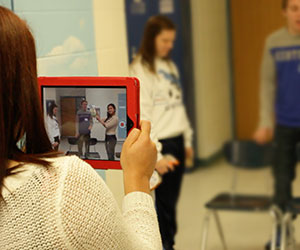 When we started BenchFly five years ago, in 2009, our mission was to make research a better career for current and future generations of scientists. Today we continue to work toward this goal using video as the primary means to educate scientists in companies, in universities and now in high schools! In the fall of 2013, we were incredibly fortunate to have met Kentucky teacher Tricia Shelton (thank you, Twitter!) arguably one of the most energetic, passionate, and dedicated teachers out there. In less than 12 months, our collaboration has resulted in a new video-based curriculum, called The ART of Video™, and a Gates Foundation grant supporting further assessment of the program’s potential in the classroom. Thanks to Tricia, we’re engaging with and developing those future scientists we’ve been thinking about since 2009.
Pipetting with Your iPhone?
by
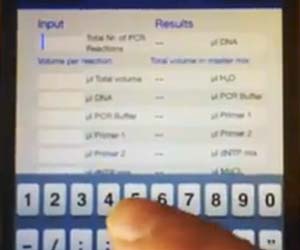 “Set timer for ten minutes.” Instead of the kitchen timers the rest of us use, the post-doc sitting behind me regularly uses Siri to time his experiments. As it turns out, it’s actually easier to tell a computer to set a timer for you than to do it yourself, and Siri is quickly becoming our lab’s newest research assistant. With a new iPhone model out each year, it’s not hard to believe that we’ll soon have everything we need on the little 2¼” x 4¾” device we can no longer go anywhere without. But what does that mean for us lab rats? And how can we leverage new technology to save us some time (something none of us ever have enough of)?
Stay Tuned…
by
Summer, 2014…what a great moment in history. Apple announced “Continuity” at WWDC, the 2016 US Presidential election is starting to ramp up (wait, WHAT!?), England and Spain were knocked out of the World Cup so fast I didn’t even have time to write a joke about bad refereeing and corrupt FIFA officials, and “Fargo” blazed through ten spectacular episodes on FX.
Avoid Pouring Chemicals–and Your Reputation–Down the Drain
by
 Dear Dora,
Everyone in my new lab pours all sorts of solvents down the drain and says it’s ok because they flush with a lot of water. I’m a first-year graduate student so maybe this is how all labs work, but it seems crazy. Is there a way for me to bring this issue up without being the annoying newbie?
– anonymous, first year graduate student
The Science of Thriving: Empowering Your Life in the Lab
by
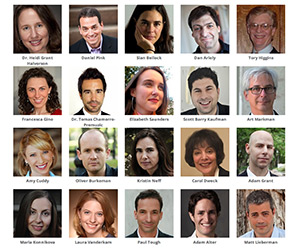 Anyone who has worked in a lab for more than a month understands that with the great excitement of research also comes frustration. This is part of the process of working at the forefront of knowledge–some ideas are going to work and some aren’t. As scientists, our job is to make advances in our understanding of the world around us and that doesn’t always come easily. However, we understand (first hand!) the toll that failed experiments can have on our attitude, motivation, and general outlook on career prospects. But if “understanding our experiments” is a matter of science, then how is “understanding our success” any different? Glad you asked…
[Continue Reading…]
Interview: The Future of Publishing and the Fear of Getting Scooped
by
 We recently reconnected with our friend, Eva Amsen Ph.D., and found that in the time since our last conversation she’s moved on to a new job (congrats!). Her new position at Faculty of 1000 has thrown her right in the middle of a topic many scientists are very interested in–the future of scientific publishing. In a world of ever-increasing numbers of journals and lower technological barriers to information sharing, it’s unclear whether most publications will survive. We recently spoke with Eva about her views on the future and how the fear of getting scooped may be a driver for a new model of publication.
