
 The life of a scientist can be very hard. Some of us find ourselves fighting through graduate school and postdoctoral fellowships, battling for jobs in a saturated job market, and then bootstrapping our way through the progression of our career trajectory. Regardless of that, obtaining a PhD is extraordinarily rewarding and impactful to society!
Flyceum: Your Science. Your Career.
We’re following in the tradition of open discussions among scientists that has resulted in important advances in both science and society.
The Broken Graduate Education Experience
by
The Conferencation: Adding Personal Time to a Scientific Meeting
by
 Dear Dora,
Any tips on how to tack a vacation on to a conference without my PI getting angry? I’m traveling to a conference in a great location and I want to stay an extra week after the conference (which itself is a week long), but I’m really nervous to tell the boss.
-RJ, graduate student
My (non)Postdoc Story: Marketing at Scientific Publisher
by
 While nearly all of us face challenges during our postdoctoral years, we often feel alone in our struggles. In this series, we hope to share encouraging and uplifting stories of how other scientists were able to turn their situation around and move forward, despite a non-ideal situation. Like snowflakes, fingerprints, and nightmares, every postdoctoral experience is unique, so today we share the (non)Postdoc Story of another successful scientist.
Keeping Preliminary Results Private with an Overexcited PI
by
 Dear Dora,
Is there a nice way to tell your boss to “keep his trap shut”?! Every time I share preliminary results, I find out later he tells our collaborators and a few times this has backfired when I wasn’t able to validate my preliminary result. I know I could just stay quiet until the data are validated, but I value his input and don’t want to lose his insights and feedback simply because I can’t trust him to keep new results quiet.
-Angie, graduate student
Rules of a Scientist’s Life
by
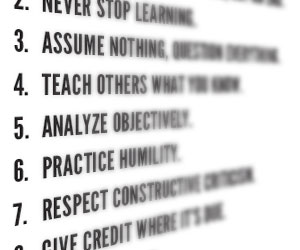 We’re three weeks into the new year. By now, most of us have decided that the “all organic raw nuts and berries” diet we were so gung ho about probably isn’t going to make it into February. Nor is the six-days-a-week workout schedule we undertook on January 2nd, after the hangover wore off. For now, three days a week will do. By March, we won’t even remember which gym we signed up with. Reflecting upon the over-optimistic personal goals we set for ourselves every January, we pondered whether their were rules of a scientist’s life that we should adhere to at all times, regardless of the month.
2012: A Killer Year Impossible Without You…and You…and You
by
 As 2012 winds down and people start hiding their pipetman stash in anticipation of heading home for the holidays, we wanted to take a minute to reflect on the year and say thanks to those who helped make it a great success.
How Long is Acceptable for Holiday Vacation?
by
 Dear Dora,
I am a new PhD student and I relocated several states away from my home to attend graduate school. I am looking forward to going home for the holidays but I am unsure of how long is appropriate to be away from the office. I am not going home for Thanksgiving but I would like to take as much time as I can to enjoy my family during the Christmas season. What are the expectations/norms for graduate student time off around the holidays? Is there an ‘unspoken rule’ that even if we are home for the holidays that we should still be working?
Thank you,
First-year PhD student
My Postdoc Story: World Traveler
by
 While nearly all of us face challenges during our postdoctoral years, we often feel alone in our struggles. In this series, we hope to share encouraging and uplifting stories of how other scientists were able to turn their situation around and move forward, despite a non-ideal situation. Like snowflakes, fingerprints, and nightmares, every postdoctoral experience is unique, so today we share the Postdoc Story of another successful scientist.
Graduate School: How Long is Too Long?
by
 Dear Dora,
How long is *too* long to be in grad school? There’s a 9th year in our department and it scares the life out of me. What do you think?
-Alexa, second-year graduate student
Small Brains, Big Ideas: Inspiring Latin American Scientists
by
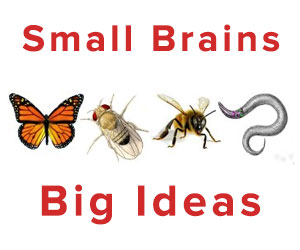 As graduate students, it can be tempting to fall into the role of “seen and not heard”, believing that our larger contribution to science will have to wait until our name has a more commanding title to it. But two entrepreneurial scientists prove that with initiative, vision and determination, changing the face of science is possible at any time.
